


ASUS PRIME GeForce RTX 5070 OC Edition in 3DMark Benchmark (DirectX, Raytracing)
Here you can see how fast the ASUS PRIME GeForce RTX 5070 OC Edition is in 3DMark Benchmark (DirectX, Raytracing). The performance of the graphics card in benchmarks or games primarily depends on the GPU architecture, the number of texture shaders and the memory size. The ASUS PRIME GeForce RTX 5070 OC Edition has 12 GB GDDR7 memory.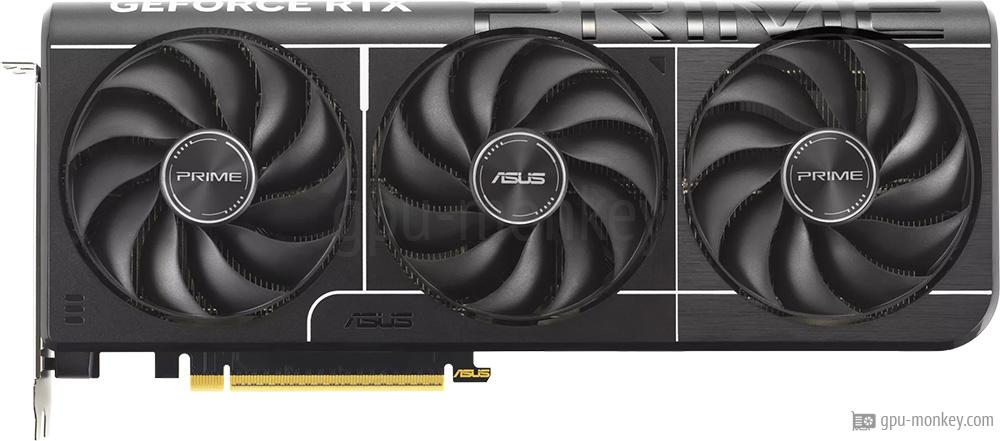
GPU |
|
| Based on: | NVIDIA GeForce RTX 5070 |
| GPU Chip: | GB205-300-A1 (Blackwell) |
| Streaming Multiprocessors: | 48 |
| Shader: | 6144 |
| Raytracing Cores: | 48 |
Memory |
|
| Memory Size: | 12 GB |
| Memory Type: | GDDR7 |
| Memory Clock: | 1.750 GHz |
| Memory bandwidth: | 672 GB/s |
| Memory Interface: | 192 bit |
Benchmark results
3DMark Benchmark (DirectX, Raytracing)
3DMark is a benchmark program that determines the performance of certain components of a computer and then reports the performance as a numerical value.Time Spy Graphics score

|
ASUS PRIME GeForce RTX 5070 OC Edition
12 GB GDDR7 |
||

|
NVIDIA GeForce RTX 5070
Average of gpu group |
||
Time Spy Extreme Graphics score
|
|
ASUS PRIME GeForce RTX 5070 OC Edition
12 GB GDDR7 |
||
|
|
NVIDIA GeForce RTX 5070
Average of gpu group |
||
Steel Nomad Light Graphics score
|
|
ASUS PRIME GeForce RTX 5070 OC Edition
12 GB GDDR7 |
||
|
|
NVIDIA GeForce RTX 5070
Average of gpu group |
||
Steel Nomad Graphics score
|
|
ASUS PRIME GeForce RTX 5070 OC Edition
12 GB GDDR7 |
||
|
|
NVIDIA GeForce RTX 5070
Average of gpu group |
||
Port Royal (Raytracing)
|
|
ASUS PRIME GeForce RTX 5070 OC Edition
12 GB GDDR7 |
||
|
|
NVIDIA GeForce RTX 5070
Average of gpu group |
||
Speed Way Graphics Score (Raytracing)
|
|
ASUS PRIME GeForce RTX 5070 OC Edition
12 GB GDDR7 |
||
|
|
NVIDIA GeForce RTX 5070
Average of gpu group |
||
Solar Bay (Raytracing)
|
|
ASUS PRIME GeForce RTX 5070 OC Edition
12 GB GDDR7 |
||
|
|
NVIDIA GeForce RTX 5070
Average of gpu group |
||
More benchmarks for the graphics card
ASUS PRIME GeForce RTX 5070 OC Edition
In order to determine the performance of a graphics card, so-called "benchmarks" are carried out. The benchmark software carries out special calculations to determine the performance of a graphics card. We use so-called theoretical or synthetic benchmarks (e.g. 3D Mark) as well as real game benchmarks. To ensure real comparability of the results, we pay attention to the correct execution of the benchmarks as well as the condition of the graphics card and the system.We use the following benchmarks to measure the performance of a graphics card:


GPUs by group
Here we have listed more GPU groups for you:
AMD Radeon RX 7600
8 GB GDDR6
8 GB GDDR6
AMD Radeon RX 7600 XT
16 GB GDDR6
16 GB GDDR6
AMD Radeon RX 7700 XT
12 GB GDDR6
12 GB GDDR6
AMD Radeon RX 7800 XT
16 GB GDDR6
16 GB GDDR6
AMD Radeon RX 7900 XT
20 GB GDDR6
20 GB GDDR6
AMD Radeon RX 7900 XTX
24 GB GDDR6
24 GB GDDR6
AMD Radeon RX 9070
16 GB GDDR6
16 GB GDDR6
AMD Radeon RX 9070 XT
16 GB GDDR6
16 GB GDDR6
NVIDIA GeForce RTX 4060
8 GB GDDR6
8 GB GDDR6
NVIDIA GeForce RTX 4060 TI (16GB)
16 GB GDDR6
16 GB GDDR6
NVIDIA GeForce RTX 4060 TI (8GB)
8 GB GDDR6
8 GB GDDR6
NVIDIA GeForce RTX 4070
12 GB GDDR6X
12 GB GDDR6X
NVIDIA GeForce RTX 4070 SUPER
12 GB GDDR6X
12 GB GDDR6X
NVIDIA GeForce RTX 4070 Ti
12 GB GDDR6X
12 GB GDDR6X
NVIDIA GeForce RTX 4070 Ti SUPER
16 GB GDDR6X
16 GB GDDR6X
NVIDIA GeForce RTX 4080
16 GB GDDR6X
16 GB GDDR6X
NVIDIA GeForce RTX 4080 SUPER
16 GB GDDR6X
16 GB GDDR6X
NVIDIA GeForce RTX 4090
24 GB GDDR6X
24 GB GDDR6X
NVIDIA GeForce RTX 5050
8 GB GDDR6
8 GB GDDR6
NVIDIA GeForce RTX 5060
8 GB GDDR7
8 GB GDDR7
NVIDIA GeForce RTX 5060 TI 16GB
16 GB GDDR7
16 GB GDDR7
NVIDIA GeForce RTX 5060 TI 8GB
8 GB GDDR7
8 GB GDDR7
NVIDIA GeForce RTX 5070
12 GB GDDR7
12 GB GDDR7
NVIDIA GeForce RTX 5070 TI
16 GB GDDR7
16 GB GDDR7
NVIDIA GeForce RTX 5080
16 GB GDDR7
16 GB GDDR7
NVIDIA GeForce RTX 5090
32 GB GDDR7
32 GB GDDR7

More GPU groups
show more results
show more results
back to index

