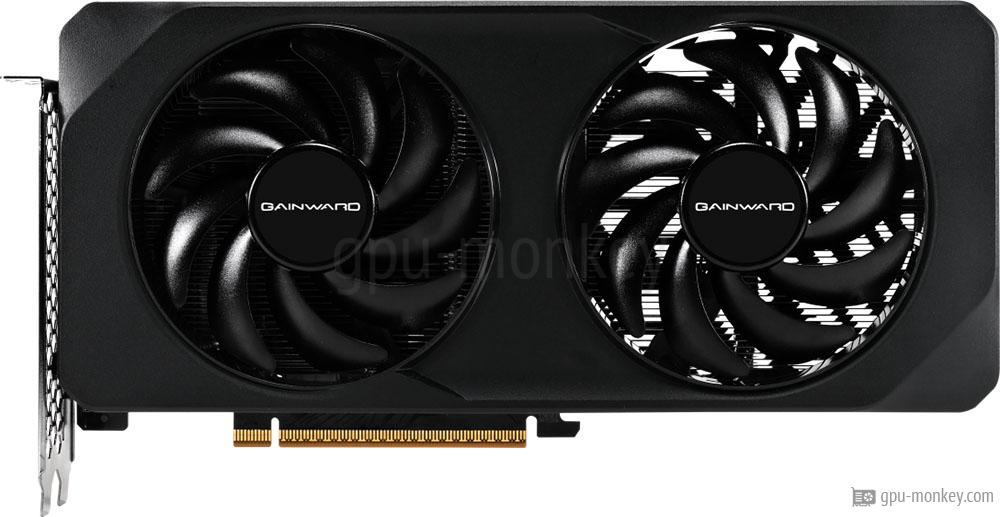
Gainward GeForce RTX 5050 Pegasus
Benchmark and Specs


Last updated:

Benchmark and Specs

Here we show you benchmarks and technical data for the Gainward GeForce RTX 5050 Pegasus. The graphics card is based on the NVIDIA GeForce RTX 5050 (Blackwell 2.0) and has 8 GB GDDR6 graphics memory with a memory bandwidth of 320 GB/s. The Gainward GeForce RTX 5050 Pegasus has 20 execution units with 2560 shaders.

GPU

The Gainward GeForce RTX 5050 Pegasus has 2560 shaders and 20 execution units. The graphics card thus achieves a theoretical FP32 computing power of 13.17 TFLOPS.

Based on: NVIDIA GeForce RTX 5050
GPU Chip: GB207-300-A1 (Blackwell 2.0)
Streaming Multiprocessors: 20
Shader: 2560
Render Output Units: 32
Texture Units: 80
Raytracing Cores: 20

Memory

The Gainward GeForce RTX 5050 Pegasus can use 8 GB graphics memory of the type GDDR6. The graphics card thus achieves a memory bandwidth of 320 GB/s on a 128 bit wide memory interface.

Memory Size: 8 GB
Memory Type: GDDR6
Memory Clock: 2.500 GHz
Memory Speed: 20.0 Gbps
Memory bandwidth: 320 GB/s
Memory Interface: 128 bit

Clock Speeds

The base clock frequency of the Gainward GeForce RTX 5050 Pegasus is 2.280 GHz. A high clock frequency (even in turbo mode) can greatly increase the speed of a graphics card.

Base Clock: 2.280 GHzDeviation vs GPU group-2 %
Boost Clock: 2.572 GHz
Avg (Game) Clock:
Overclocking: Yes

Thermal Design

The TDP (Thermal Design Power) of the Gainward GeForce RTX 5050 Pegasus is --. The graphics card is supplied with energy via the 1 x 8-Pin connector.

TDP: 100 W (Reference)
TDP (up): --
Tjunction max: 85 °C
PCIe-Power: 1 x 8-Pin

Cooler & Fans

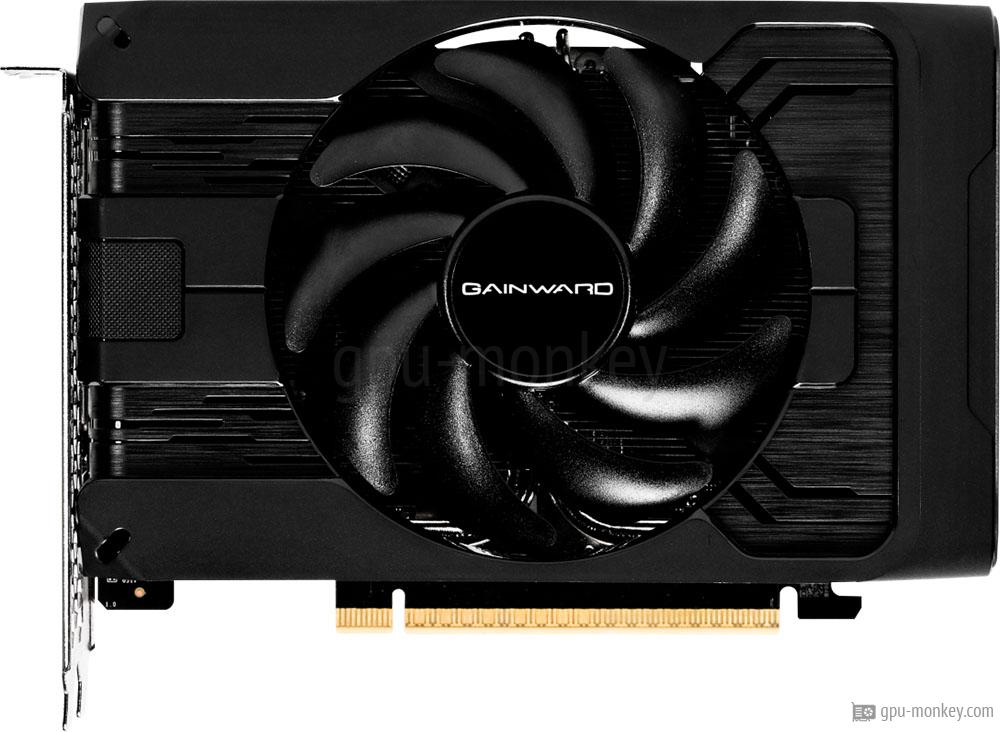
The Gainward GeForce RTX 5050 Pegasus has a total of 1 Axial fans to cool the graphics processor and graphics memory.

Fan-Type: Axial
Fan 1: 1 x 100 mm
Fan 2: --
Cooler-Type: Air cooling
Noise (Idle): 0 dB / Silent
Noise (Load): --

Connectivity

Up to 4 screens can be connected to the Gainward GeForce RTX 5050 Pegasus.

Max. Displays: 4
HDCP-Version: 2.3
HDMI Ports: 1x HDMI v2.1b
DP Ports: 3x DP v2.1b
DVI Ports: --
VGA Ports: --
USB-C Ports: --

Featureset

The Gainward GeForce RTX 5050 Pegasus has a maximum resolution of 7680x4320 pixels. The graphics card supports the DirectX 12_2 (Ultimate) standard.

Max. resolution: 7680x4320
DirectX: 12_2 (Ultimate)
Raytracing: Yes
DLSS / FSR: Yes
LED: No LED lighting

Supported Video Codecs

The video codecs accelerated in hardware by the Gainward GeForce RTX 5050 Pegasus reduce the processor load and ensure lower energy consumption.

h264: Decode / Encode
h265 / HEVC: Decode / Encode
VP8: Decode / Encode
VP9: Decode / Encode
AV1: Decode / Encode

Dimensions

The Gainward GeForce RTX 5050 Pegasus is 170 mm long and 118 mm high. With a width of 40 mm, the graphics card requires 2 PCIe-Slots in the case.

Length: 170 mm
Height: 118 mm
Width: 40 mm
Width (Slots): 2 PCIe-Slots
Weight: --
SFF-Ready: No

Additional data

The Gainward GeForce RTX 5050 Pegasus made in 5 nm was published in Q3/2025 for 249 $ (Reference).

GPU Interface: PCIe 5 x 8
Release date: Q3/2025
Launch Price: 249 $ (Reference)
Structure size: 5 nm
Part-no: NE65050019P1-GB2070E
Documents: data sheet

Rate this graphics card

Here you can rate this graphics card and help other visitors with their purchase decision. The average rating for this graphics card is currently 0 stars (0 ratings). Rate it now:

Benchmark results

FP32 Performance (Single-precision TFLOPS)

The theoretical computing power of the graphics card with single precision (32 bit) in TFLOPS indicates how many trillion FP32 floating point operations the graphics card (GPU) can perform per second.

FP32 (TFLOPS)

More benchmarks

In order to determine the performance of a graphics card, so-called "benchmarks" are carried out. The benchmark software carries out special calculations to determine the performance of a graphics card. We use so-called theoretical or synthetic benchmarks (e.g. 3D Mark) as well as real game benchmarks. To ensure real comparability of the results, we pay attention to the correct execution of the benchmarks as well as the condition of the graphics card and the system.

We use the following benchmarks to measure the performance of a graphics card:

Popular comparisons

1. Gainward GeForce RTX 5050 Ghost Gainward GeForce RTX 5050 Pegasus Gainward GeForce RTX 5050 Ghost vs Gainward GeForce RTX 5050 Pegasus
2. Gainward GeForce RTX 5050 Pegasus GIGABYTE GeForce RTX 5050 WINDFORCE OC Gainward GeForce RTX 5050 Pegasus vs GIGABYTE GeForce RTX 5050 WINDFORCE OC
3. Gainward GeForce RTX 5050 Pegasus NVIDIA GeForce RTX 3060 (LHR) Gainward GeForce RTX 5050 Pegasus vs NVIDIA GeForce RTX 3060 (LHR)
4. Gainward GeForce RTX 5050 Pegasus ASUS ROG Strix GeForce RTX 2080 OC Gainward GeForce RTX 5050 Pegasus vs ASUS ROG Strix GeForce RTX 2080 OC
5. MSI GeForce RTX 5050 GAMING OC Gainward GeForce RTX 5050 Pegasus MSI GeForce RTX 5050 GAMING OC vs Gainward GeForce RTX 5050 Pegasus
6. ASUS Dual GeForce RTX 5060 Gainward GeForce RTX 5050 Pegasus ASUS Dual GeForce RTX 5060 vs Gainward GeForce RTX 5050 Pegasus
7. Manli Polar Fox GeForce RTX 5060 Ti 8GB OC Gainward GeForce RTX 5050 Pegasus Manli Polar Fox GeForce RTX 5060 Ti 8GB OC vs Gainward GeForce RTX 5050 Pegasus
8. Gainward GeForce RTX 5050 Pegasus MSI GeForce RTX 5060 INSPIRE ITX Gainward GeForce RTX 5050 Pegasus vs MSI GeForce RTX 5060 INSPIRE ITX
9. Gainward GeForce RTX 5050 Pegasus GIGABYTE GeForce RTX 2060 MINI ITX OC 6G (rev 1.0) Gainward GeForce RTX 5050 Pegasus vs GIGABYTE GeForce RTX 2060 MINI ITX OC 6G (rev 1.0)
10. Gainward GeForce RTX 5050 Pegasus MSI GeForce RTX 3070 Suprim 8G Gainward GeForce RTX 5050 Pegasus vs MSI GeForce RTX 3070 Suprim 8G


back to index
Facebook
Twitter