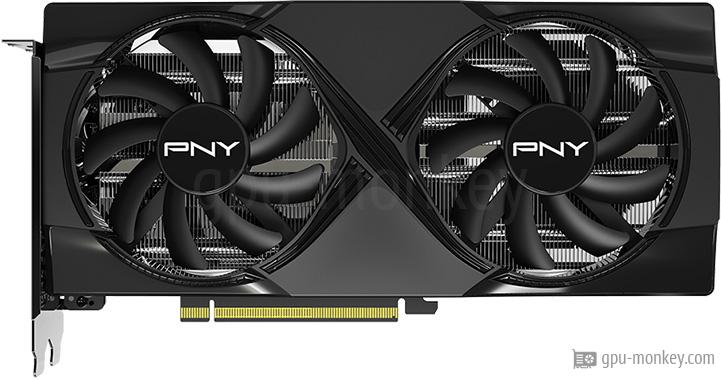
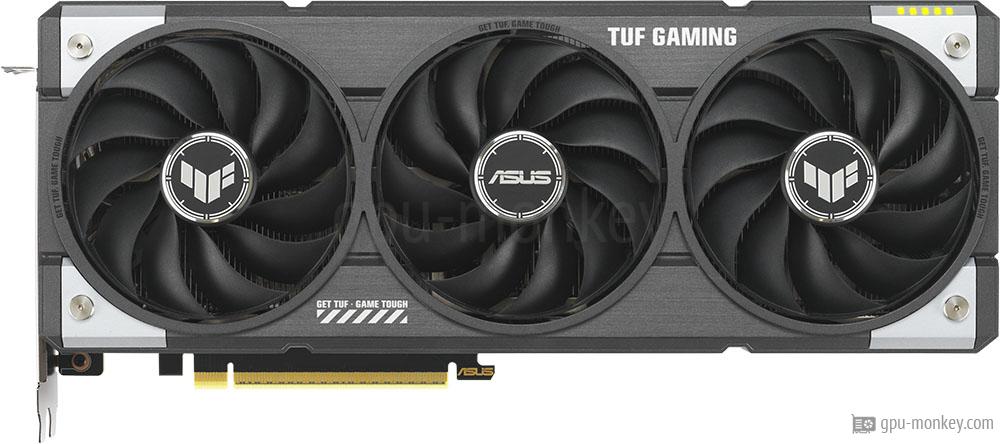
The PNY GeForce RTX 5060 Ti 8GB OC Dual Fan is equipped with 36 execution and 4608 shader units. With single precision, a theoretical FP32 computing power of 24.81 TFLOPS is achieved.
- GPU Chip
- GB206 (Blackwell)
- Streaming Multiprocessors
- 36
- Shader
- 4608
- Render Output Units
- 48
- Texture Units
- 144
- Raytracing Cores
- 36
The PNY GeForce RTX 5060 Ti 8GB OC Dual Fan has a 128 bit wide memory interface, with which a memory bandwidth of 448 GB/s is achieved. In total, 8 GB GDDR7 graphics memory is available for the graphics card.
- Memory Size
- 8 GB
- Memory Type
- GDDR7
- Memory Clock
- 1.750 GHz
- Memory Speed
- 28.0 Gbps
- Memory bandwidth
- 448 GB/s
- Memory Interface
- 128 bit
The manufacturer specifies the memory clock of the PNY GeForce RTX 5060 Ti 8GB OC Dual Fan with 2.407 GHz (base clock) or with 2.692 GHz (turbo clock). If overclocking is supported (see below), the clock rate can be increased even further.
- Base Clock
- 2.407 GHz
- Boost Clock
- 2.692 GHz+5 %
- Overclocking
- Yes
The PNY GeForce RTX 5060 Ti 8GB OC Dual Fan has 1 x 8-Pin plugs, which supply the graphics card with energy. The maximum operating temperature of the card is 87 °C.
- TDP
- 180 W
- Tjunction max
- 87 °C
- PCIe-Power
- 1 x 8-Pin
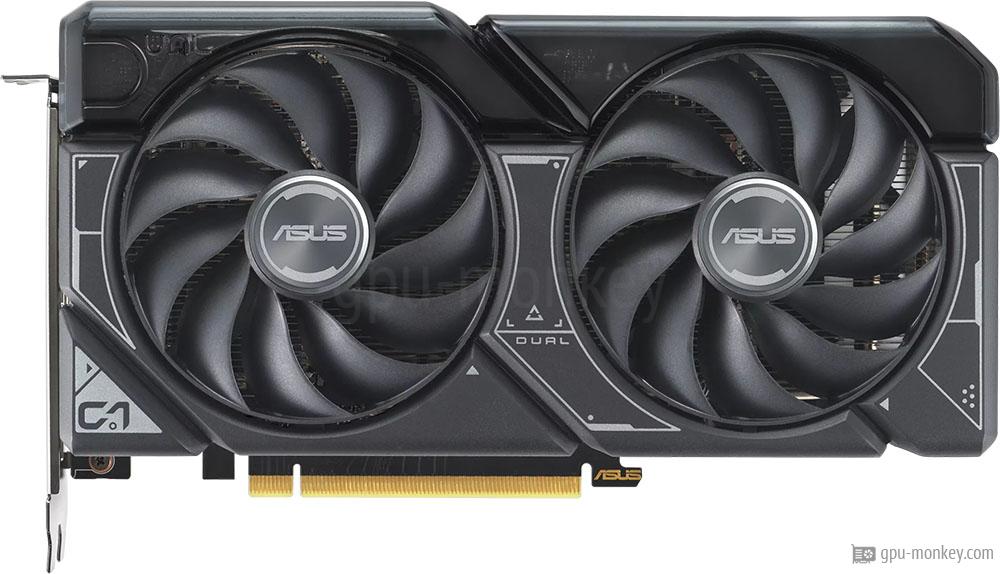
The PNY GeForce RTX 5060 Ti 8GB OC Dual Fan is equipped with 2 Axial main fans, which are used to cool the graphics processor and graphics memory.
- Fan-Type
- Axial
- Fan 1
- 2 x 90 mm
- Cooler-Type
- Air cooling
- Noise (Idle)
- 0 dB / Silent
Up to 4 screens can be connected to the PNY GeForce RTX 5060 Ti 8GB OC Dual Fan, whereby the backward-compatible HDCP copy protection is supported in the 2.3 version.
- Max. Displays
- 4
- HDCP
- 2.3
- HDMI
- 1x HDMI 2.1b
- DisplayPort
- 3x DP 2.1b
The PNY GeForce RTX 5060 Ti 8GB OC Dual Fan supports a maximum resolution of 7680x4320 pixels and the DirectX standard version 12_2 (Ultimate).
- Max. resolution
- 7680x4320
- DirectX
- 12_2 (Ultimate)
- Raytracing
- Yes
- DLSS / FSR
- Yes
- LED
- No LED lighting
Here is a list of which video codecs can be decoded / encoded by the PNY GeForce RTX 5060 Ti 8GB OC Dual Fan in hardware in order to minimize the processor load.
- h264
- Decode / Encode
- h265 / HEVC
- Decode / Encode
- VP8
- Decode / Encode
- VP9
- Decode / Encode
- AV1
- Decode / Encode
The dimensions of the PNY GeForce RTX 5060 Ti 8GB OC Dual Fan are 245 mm in length, 120 mm in height and 40 mm in width. Thus 2 PCIe-Slots are needed in a case.
- Length
- 245 mm
- Height
- 120 mm
- Width
- 40 mm
- Width (Slots)
- 2 PCIe-Slots
- SFF-Ready
- No
The PNY GeForce RTX 5060 Ti 8GB OC Dual Fan is manufactured in a structure width of 4 nm and has a PCIe 5 x 8 lanes interface. The graphics card was released in Q2/2025.
- GPU Interface
- PCIe 5 x 8
- Release date
- Q2/2025
- Launch Price
- 379 $ (Reference)
- Structure size
- 4 nm
- Part-no
- VCG5060T8DFXPB1-O